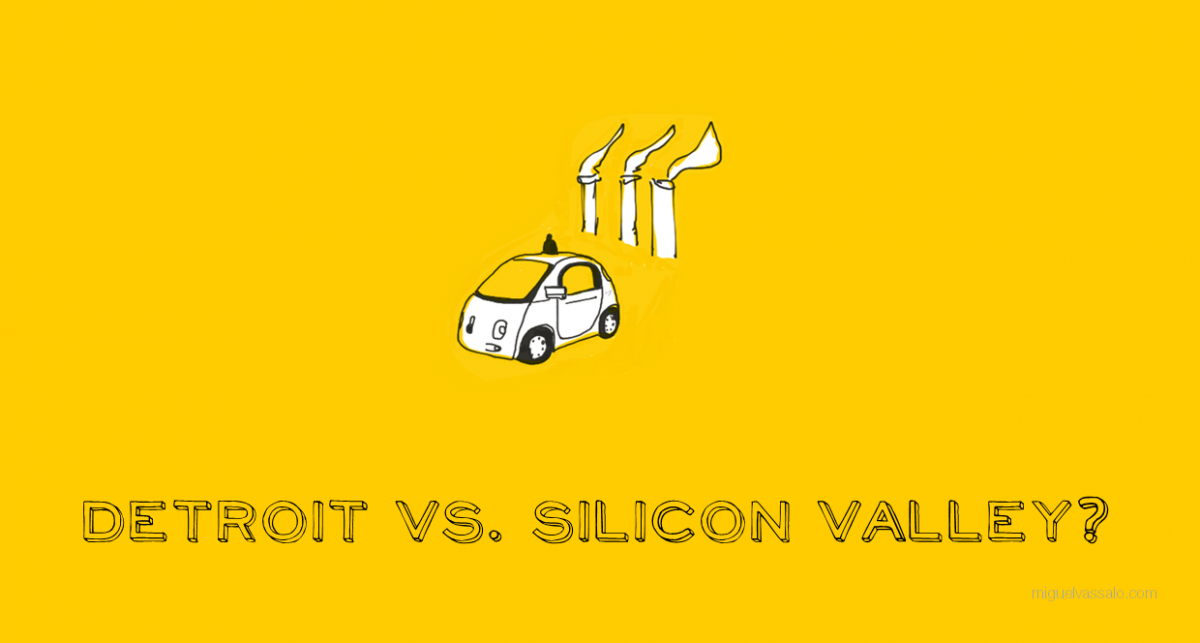
We are witnessing an exciting dispute between traditional automakers and companies whose DNA is inextricably linked to information technology. Young technology-based companies with seemingly unlimited access to venture capital or giants such as Google or Apple are putting pressure on the century-old car industry value chain.
As happened and is happening in other industries, connectivity and increasing digitalization of business models is beginning to bring innovation, and ultimately disruption, to the sector.
At the same time, consumer behaviour appears to be changing towards mobility, progressively moving away from a product-centric experience to perhaps a more rational one, focused on service and TCO.
A few months ago, Apple announced an impressive 1-billion-dollar investment in the Chinese giant Didi (the equivalent of Uber in China). The incursions that various technology companies, including Google, Tesla and Uber itself, have made into the industry through the development of autonomous driving systems are also well known.
And why so much interest and consequent huge investment in the sector?
It seems clear that we are moving quickly towards new profitable, service-driven and data-driven business models. These new models are relegating the hardware, in this case, the motor vehicle, to an eminently utilitarian role. A new ecosystem that sees the gravitational centre of the industry moving from manufacturers to a more open and multilayered realm, promising to completely change the industry’s current paradigm. And this is par excellence, the natural habitat of technology companies.
“It seems clear that we are moving quickly towards new profitable, service-driven and data-driven business models.”
Just to give an example, take a moment to think of the overwhelming amount of data generated by a single car. Data regarding the vehicle itself, the surrounding space and its respective driver and passengers. Although it has been technically possible for a few years now, automakers, who in theory would be especially well placed to do so, have not systematically collected, processed and monetized this information with the aim of developing products and services adapted to the current demands of consumers. It is an opportunity not fully exploited thus far.
However, the manufacturers, fully aware of the current challenges, seek to remain relevant by bringing new skills in information engineering to the party. This year GM invested in Lyft. Toyota and Uber outlined strategic cooperation. And Volkswagen poured millions of dollars into a young Israeli mobility platform called Gett.
In short, we have an industry in transformation. Emerging business models focusing on services and managed on the basis of data. And needs so far unfulfilled. This is the scenario where manufacturers and technology, sometimes in cooperation, sometimes in open competition, are fighting to maintain or gain possession through a direct relationship with the consumer. Promising to deliver unprecedented convenience and value. But also envisioning new, highly profitable business opportunities.
It is natural that, in the near future, there will be no visible changes. But if Moore’s law is right, in this case, applied to the digital transformation of the automotive industry, our generation will have the privilege of seeing profound and exciting changes.
** Opinion article originally published in Fleet Magazine paper edition /September 2016 **
_________________________
Thanks for reading! Check back soon for another article: CREATIVE DESTRUCTION
All opinions expressed are my own and not to be associated with my employer or any other organization I am associated with.