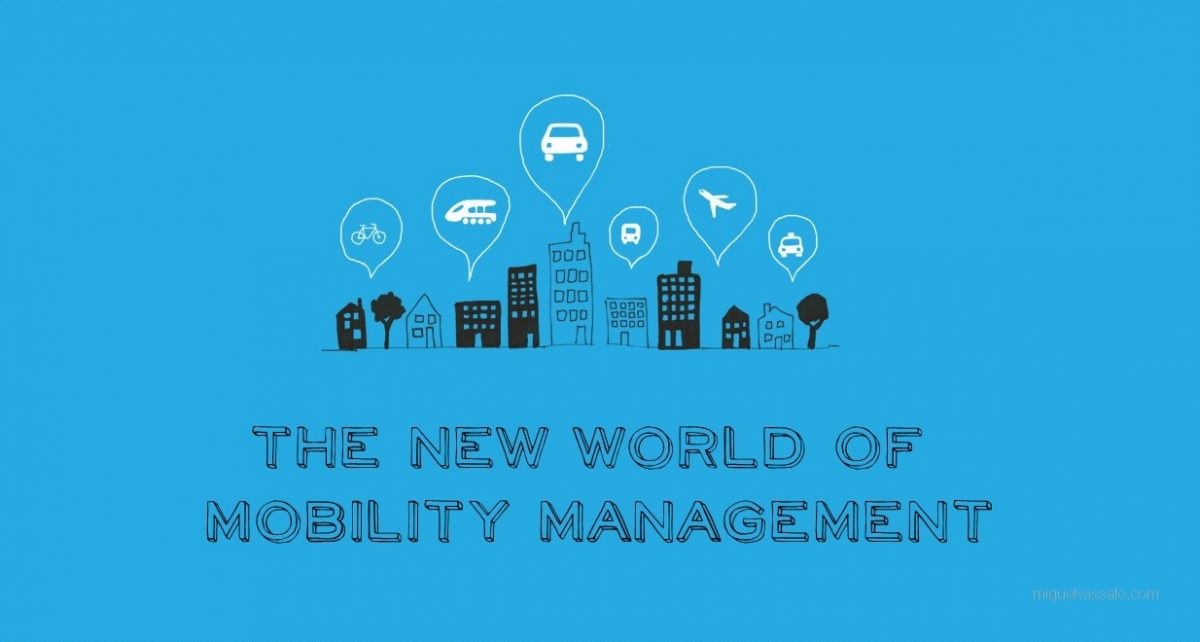
Some of the components that are going to frame a new mobility ecosystem are starting to take shape in Portugal. In 2014, Uber reached Lisbon, and despite all the controversy and the current climate of uncertainty regarding the legal status of ride-hailing platforms, the fact is that there has been overwhelming acceptance of this kind of service. Last September, Brisa, in partnership with DriveNow, launched the first car sharing solution with a genuinely useful level of availability for those seeking an alternative for getting around Lisbon. At around the same time, following the example of other Portuguese locations, shared bikes also became available for us to use through Gira – Bicicletas de Lisboa.
Curiously, or perhaps not, the first two enable us to choose at any given time whether to use them in a private or business setting. As a result, a new world of corporate mobility is opening up in Portugal. Companies in general, and Fleet Managers in particular can now choose from new alternatives, for the time being in an urban environment, for managing their workers’ mobility.
Even though the current model of car fleets and company cars continues to predominate, it is expected that models such as carsharing (e.g. DriveNow), ride-hailing (e.g. Uber), ride-sharing or carpooling (e.g. BlaBlaCar or our Via Verde Boleias), and even mobility budgets, will begin to gain ground as genuine alternatives. This will challenge the current hegemony of the fleet model and consolidated metrics, such as the focus on the maximisation of efficiency, as measured by TCO. This is especially true since we are also facing strong catalysts for change, such as environmental concerns (it is said that the movement towards electric alternatives in companies is starting to gather momentum) and behavioural changes in younger generations, who are starting to enter the job market.
“All the potential of a new mobility ecosystem will only be harnessed when we are able to interconnect all transport systems, including buses, trains, planes, etc.”
In his book “Corporate Mobility Breakthrough 2020”, which looks at this issue of the future of mobility in a corporate setting, Lukas Neckermann examines the concept of Total Cost of Mobility (TCM), where the analysis centres not only on the car and its life cycle, but also takes a broader look at workers’ travel patterns, whatever the means of transport and implementation of new configurations focused on efficiency, convenience for the user and, naturally, cost-cutting.
Although this situation is relatively new, in Portugal, our companies have proved attentive and well-informed. A reflection of this is the Corporate Vehicle Observatory report “2017 Fleet Barometer”, according to which around 42% of Portuguese companies questioned already use, or are thinking of using in the next three years, at least one of the mobility alternatives. And 12% cautiously believe that they could do away with part or all of their fleet. Indeed, both figures are more or less in line with the average of the European countries analysed in the study.
However, we must not forget that we are still only taking the first steps. All the potential of a new mobility ecosystem will only be harnessed when we are able to interconnect all transport systems, including buses, trains, planes, etc. Full-scale Mobility as a Service – MaaS will only come about in this manner. A simple point of contact that helps us get from A to B using the best combination of multimodal transport. And from a corporate standpoint, this convergence is essential for guaranteeing the efficiency of the entire process, a reduction in administrative management and cost savings. By way of example, Moovel, Daimler’s integrated mobility platform and the Portuguese CEiiA’s mobi.me system are already working on a solution to this ultimate challenge.
These are, without doubt, exciting times in the automotive industry. And of course, given the weight they represent, companies are also at the epicentre of this revolution, with Fleet Managers as one of the protagonists. This journey is going to transform them into “Mobility Managers, logistics experts and data gurus”, in the words of the author Lukas Neckermann.
Reference:
Neckermann, L. (2016). Corporate Mobility Breakthrough 2020. Troubador Publishing Ltd.
Corporate Vehicle Observatory (2017). 2017 Fleet Barometer: International report – Focus Europe.
** Opinion article originally published in Fleet Magazine paper and online edition /March 2018 **
_________________________
Thanks for reading! Check back soon for another article: THE PORTUGUESE FOOTPRINT IN THE FUTURE OF MOBILITY
All opinions expressed are my own and not to be associated with my employer or any other organization I am associated with.